

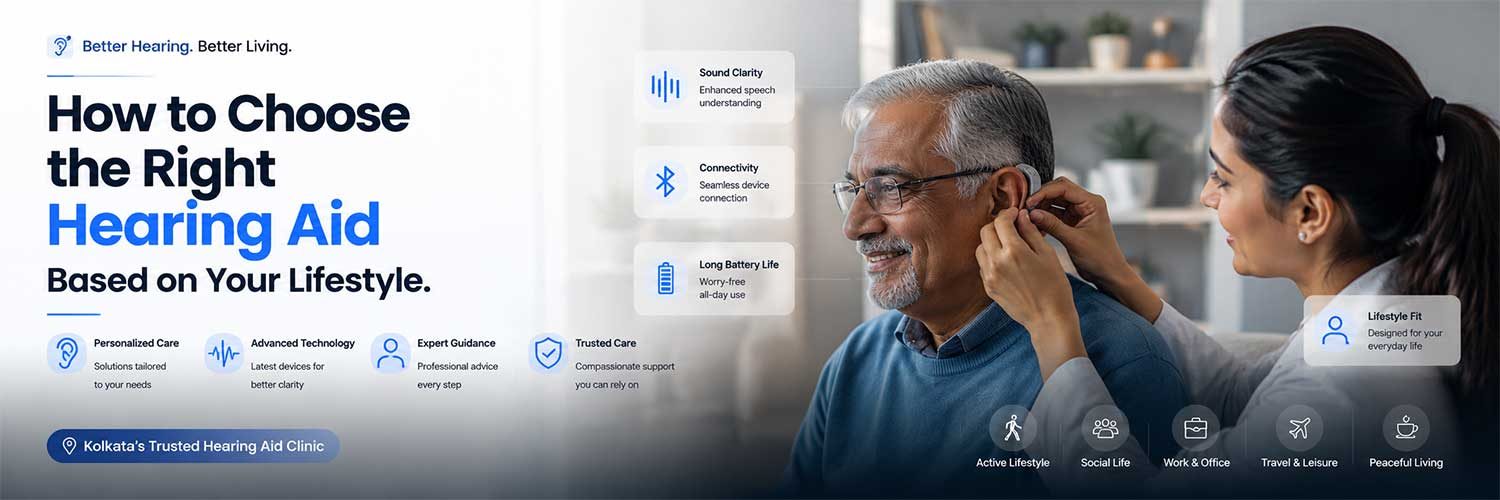
Imagine sitting at a family dinner and missing half the conversation or asking a colleague to repeat themselves during a meeting for the third time. Many people experiencing hearing loss recognise this feeling long before they decide to do something about it. When they start researching, they find dozens of hearing aid brands and price points, all claiming to be the best. Learning how to choose the right hearing aid becomes overwhelming fast. The truth is simpler: the right hearing aid depends on how you live and work, not on which model is trending or costs the most.
Why Your Lifestyle Matters When Choosing a Hearing Aid
Your daily routine determines which hearing aid features will actually help you. Someone who works in a quiet office has different listening needs than someone who commutes on busy streets or spends weekends outdoors. Hobbies, work environment, communication habits, and physical activity level all shape which device will genuinely improve your daily life.
A retired individual who mostly watches television and speaks with family at home may need a simple, comfortable device with clear speech clarity. A working professional who attends meetings and travels frequently may need Bluetooth connectivity and strong background noise handling. There is no single best hearing aid for everyone. The right choice starts with an honest look at how you spend your day.
Start with a Professional Hearing Test
A hearing test before buying a hearing aid is the single most important step in the entire process. Hearing loss is not the same for every person. Some people have difficulty with high-pitched sounds, others struggle in noisy environments, and some experience a gradual decline in both ears at different rates. A proper hearing assessment identifies the exact pattern and severity of your hearing loss.
Buying a hearing aid without a professional test often leads to poor results. Generic or self-fitted devices may amplify sounds you do not need while leaving the sounds you actually struggle with unaddressed. This can cause discomfort and a sense that hearing aids simply do not work. A qualified audiologist uses your test results to recommend a device matching your specific hearing profile, which improves your chances of long-term satisfaction.
Understanding Different Types of Hearing Aids
Modern hearing aids come in several styles, each suited to different needs, hearing loss levels, and comfort preferences. Behind-the-Ear (BTE) devices sit behind the ear and connect to the ear canal through a thin tube. They suit people with mild to severe hearing loss and are known for durability and easy handling, which makes them a popular choice for seniors.
Receiver-in-Canal (RIC) devices are similar to BTE models but smaller and more discreet, with the speaker placed directly in the ear canal, offering a natural sound experience. In-the-Ear (ITE) devices are custom-molded to fit inside the outer ear and suit people who prefer no external tubing. Completely-in-Canal (CIC) devices are the smallest, sitting deep within the ear canal for a nearly invisible fit for people with mild to moderate hearing loss who prioritise discretion.
Match Your Hearing Aid to Your Lifestyle
Once you understand your hearing loss and the available device types, the next step is matching features to your daily reality. Working professionals who attend calls, meetings, and presentations often benefit from devices with Bluetooth connectivity and directional microphones that help isolate speech in group settings. These features make it easier to follow conversations without straining.
Senior citizens who value simplicity and ease of use may prefer devices with fewer manual controls, longer battery life, and comfortable, lightweight designs. Active individuals who exercise, garden, or spend time outdoors benefit from sweat-resistant and dust-resistant devices that can handle movement and changing environments without damage.
Frequent travellers should consider rechargeable hearing aids with long battery life, reducing the need to carry spare batteries. People who regularly spend time in noisy places, such as markets or public transport, benefit most from advanced noise reduction and speech enhancement technology that helps voices stand out from background sound. Recognising which category describes your daily life makes the selection process more focused and practical.
Features That Make Everyday Listening Easier
Modern digital hearing aids offer several features that meaningfully improve day-to-day communication. Digital sound processing analyses incoming sound and adjusts amplification in real time, offering clearer and more natural listening than older analog devices. Rechargeable hearing aids have become increasingly popular because they eliminate the hassle of frequently changing tiny batteries, which is especially helpful for people with limited dexterity.
Bluetooth connectivity allows hearing aids to pair directly with smartphones, televisions, and other devices, so calls and audio stream straight into the ears. Noise reduction technology suppresses background sound in busy environments, while speech enhancement sharpens the clarity of voices specifically. Directional microphones focus on sound coming from in front of the listener, which is particularly useful in conversations and meetings.
Smartphone compatibility allows users to adjust volume and switch listening programs through an app. Water and dust resistance protect the device during daily wear or unpredictable weather. None of these features are essential for every person, but understanding what each one does helps you decide which combination genuinely fits your needs.
Common Mistakes to Avoid When Buying a Hearing Aid
Many first-time buyers make avoidable mistakes that lead to disappointment. Choosing a hearing aid based only on price is one of the most common. A cheaper device that does not match your hearing loss pattern may end up unused within months, making it a poor investment despite the lower upfront cost.
Buying online without professional guidance is another frequent mistake. Without a hearing test and proper fitting, even a well-reviewed device may not suit your specific hearing loss. Ignoring comfort and fit is equally important, since a hearing aid that feels irritating or unstable will likely be worn less often, reducing its benefit.
Not considering after-sales support can also cause long-term frustration, since hearing aids need occasional adjustments and reprogramming. Finally, selecting unnecessary features can increase cost without adding real value. A quiet homebody does not need the same connectivity as a frequent traveler, so it helps to choose features based on genuine daily needs rather than the longest specification list.
Why Professional Guidance Makes a Difference
Working with a qualified audiologist changes the entire hearing aid experience, from selection to long-term comfort. A consultation helps translate your hearing test results and lifestyle into practical recommendations, rather than leaving you to interpret technical specifications alone. Professional fitting ensures the device sits comfortably and functions correctly for your specific ear shape and hearing loss level.
Programming is equally important, since hearing aids must be calibrated to your unique hearing profile rather than generic settings. Follow-up adjustments allow your audiologist to fine-tune the device as you adjust to daily use, addressing discomfort or clarity issues early. Ongoing care, including cleaning and periodic reassessment, helps the device perform well for years and tends to improve long-term satisfaction.
How Happy Ears Helps You Choose the Right Hearing Aid
Happy Ears, a hearing care clinic in Kolkata, supports patients through every step of this decision-making process. The clinic begins with a professional hearing assessment to understand your specific hearing loss pattern, rather than recommending a device based on guesswork. From there, the audiologists at Happy Ears offer personalised hearing aid recommendations that consider your daily routine, comfort preferences, and budget.
Once a device is selected, Happy Ears provides careful fitting and adjustments so the hearing aid feels comfortable and performs accurately from the first day. Follow-up care is built into the process, allowing patients to return for reprogramming or troubleshooting as they adjust to their new device. Guidance from qualified audiologists continues well beyond the initial purchase, with ongoing hearing support designed to help patients get lasting value from their investment.
Conclusion
Choosing the right hearing aid is a personal decision that depends on your hearing test results, daily routine, and comfort preferences, not on trends or price alone. Understanding the different types of hearing aids, matching features to your lifestyle, and avoiding common buying mistakes all contribute to a better outcome. Professional guidance throughout the process, from testing to fitting to follow-up care, plays a significant role in long-term satisfaction.
If you or a family member are experiencing hearing difficulties, the most reliable next step is scheduling a professional hearing evaluation. A qualified audiologist can help you understand your specific hearing needs and recommend a device suited to how you actually live, so you can reconnect with conversations, family, and daily life with confidence.


