

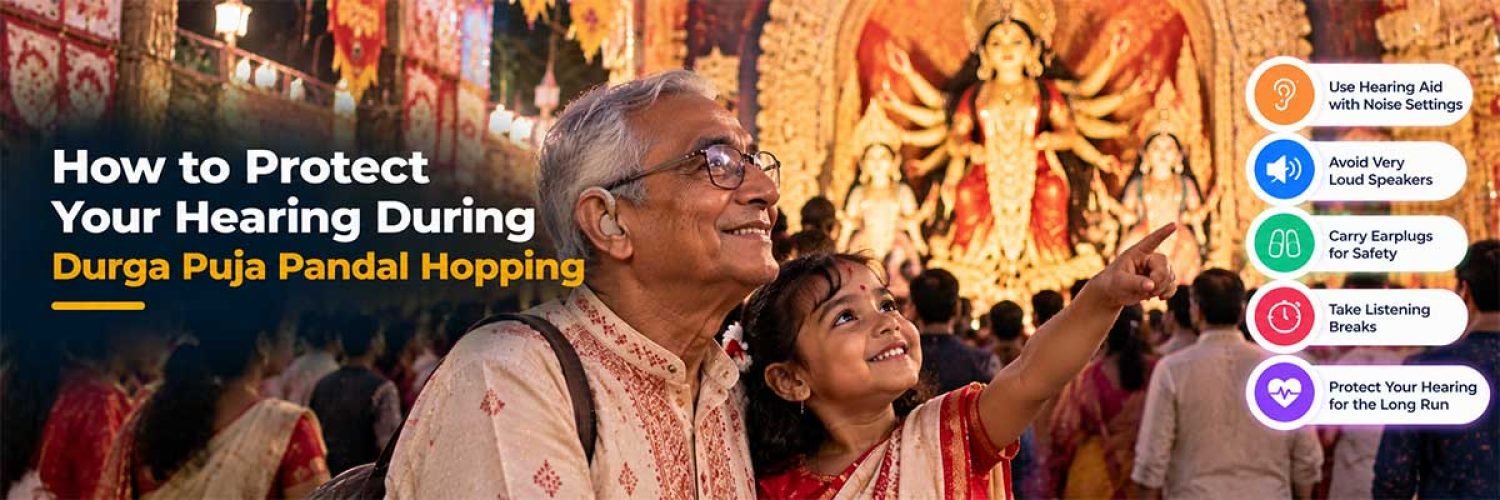
It is 9 pm and you are walking from one pandal to the next. The dhak is thundering a few steps away, a speaker is blaring somewhere behind you, and you lean in close to catch what your mother is saying. By the time you reach home, your ears feel a little blocked and there is a faint hum you did not notice earlier.
You do not have to skip any of it. Good hearing protection during Durga Puja comes down to four habits: move away from the loudest spots, spend less time near them, rest in a quieter place now and then, and wear properly fitted earplugs or earmuffs when you cannot avoid the noise.
Why Loud Noise During Durga Puja Deserves Your Attention
Trouble starts when sound is too loud, too close or goes on too long. The US National Institute on Deafness and Other Communication Disorders (NIDCD) uses exactly that rule of thumb.
Sound is measured in decibels. NIDCD says sounds at or below 70 dBA are generally safe, while long or repeated exposure to 85 dBA or more can cause hearing loss. Normal conversation sits around 60 to 70 dBA, and NIDCD lists fireworks shows at 140 to 160 dBA. Treat these numbers as a guide, not a verdict for every ear.
Time matters as much as volume. A few minutes near a speaker is not the same as three hours of speakers, drums and traffic. Also, pain is not a warning sign, since sound can harm hearing without hurting. NIDCD says temporary hearing loss from noise can clear up within 16 to 48 hours, but research suggests some long-term damage may remain even then.
None of this means one pandal visit will harm you. Noise differs from one pandal and one lane to the next, so read the situation around you instead of assuming.
7 Easy Ways to Practise Hearing Safety While Pandal Hopping
1. Stand back from the speakers and the dhak. Sound is harshest close to the source. If a speaker stack sits near the entrance, walk past it quickly and watch the aarti or the dhaki from a few steps back.
2. Try the arm’s length test. If you have to shout to be heard by someone an arm’s length away, the place is probably loud. This is a rough everyday check, not a measurement, so treat it as a cue to move away.
3. Take short breaks. Nobody can give you a safe number of minutes that suits every pandal. A simple habit works better: after a loud stretch, step into a quieter lane or sit away from the speakers for a few minutes.
4. Carry hearing protection and practise using it. Earplugs and earmuffs lower the sound that reaches your ears. The NIDCD guide to hearing protectors explains the main types. Foam earplugs are cheap and easy to carry, but they work only if you roll them thin and insert them properly. Earmuffs cover the whole ear and are easier to wear correctly, though glasses, hats and some hairstyles can leave gaps.
If you want to enjoy the music and still chat, musician-style earplugs bring the volume down more evenly, so sound stays clearer. No hearing protector blocks all sound, so fit and distance still matter. Try yours at home first. Your own voice should sound different once they are in, and they should feel snug without hurting.
5. Plan your route with quiet stops. Add a few places to sit, talk and eat away from the loudest areas.
6. Be careful around sudden loud sounds. Firecrackers can harm hearing in a moment. NIDCD advises covering your ears with your hands and moving away if you can. Never walk towards fireworks for a look, and do not push through a crowd to escape the sound. Crowd safety comes first.
7. Notice how your ears feel afterwards. Ringing, muffled hearing or trouble following speech after a night out is your cue to rest your ears and avoid more loud noise.
Hearing Protection During Durga Puja for Children and Older Family Members
Children cannot always tell you that something is too loud. They may just turn cranky, cover their ears or ask to go home, so act early when you see those signs.
- Keep children away from speakers, dhak and any spot where firecrackers may go off.
- Try child-sized earmuffs. NIDCD says earmuffs are easier than earplugs to use correctly, especially for young children, and that earplugs can be hard to find in child sizes.
- Check the fit every time, and let the child rest whenever they ask.
Older relatives may also tire quickly in noise and crowds, although not every older person has hearing loss. Let them choose where to sit and make sure they can step away from the loudest spots.
Hearing Aid Care During Durga Puja
A hearing aid helps you hear sound. It does not protect your ears from loud noise, and a noise-reduction setting does not make a roaring speaker safe. Festival days also bring dust, humidity, sweat and sudden rain, so a few habits help:
- Read the manufacturer’s instructions and your audiologist’s advice before you head out.
- Carry spare batteries, or a charged power bank if your device charges that way.
- Keep the devices away from rain, sweat, dust and knocks, and carry a storage case.
- Clean and dry them as the manufacturer says. Do not wash them, use harsh chemicals or apply heat.
- If sound turns distorted or uncomfortable, step away from the noise and check the device somewhere quiet.
There is no single rule about removing hearing aids in loud places, because it depends on the person and the device. If you are unsure whether you can wear hearing protection with your aids, ask a qualified professional. Happy Ears also offers repair and maintenance support and hearing aid care advice.
What to Do If Your Ears Ring or Feel Muffled After Pandal Hopping
Ringing, a blocked feeling or muffled hearing after a loud evening should not be brushed aside. Keep away from loud sound for a while and let your ears rest. If the symptoms last or worry you, see a doctor or an ENT specialist.
One situation cannot wait. Sudden hearing loss, especially in one ear, needs urgent medical care. NIDCD calls it a medical emergency and says to see a doctor immediately. Do not wait a few days to see if it improves, and do not assume it is just earwax.
Please do not put ear drops, cotton buds or any object in your ear to treat it yourself. This article gives general guidance and cannot diagnose you.
A Quick Hearing Checklist before You Leave Home
- Earplugs or earmuffs in your bag, already tried at home
- A rough plan for quieter breaks along your route
- Spare batteries or a charged power bank and a storage case, if you use hearing aids
Child-sized protection, and a plan to keep children away from loud sources - Rest stops for older family members
- A clear idea of symptoms you should not ignore, such as ringing that stays, muffled hearing or sudden hearing loss
Frequently Asked Questions
1. Can loud noise during Durga Puja damage hearing?
It can, depending on how loud the sound is, how close you stand and how long you stay. Hours near speakers, or a sudden burst such as a firecracker, carry more risk than a short walk past a pandal.
2. Should I wear earplugs while pandal hopping?
They are a sensible backup when you cannot move away from the noise. Make sure they fit well and let you talk comfortably.
3. Are foam earplugs or earmuffs better for children?
Earmuffs are usually easier, because NIDCD says they are simpler to use correctly, especially for young children. Check the fit, and ask a hearing-care professional if you are unsure.
4. Can I wear hearing aids around loudspeakers?
Hearing aids do not protect your ears from loud sound, so stay away from speakers. Ask your audiologist whether any hearing protection suits your devices.
5. What should I do if my ears ring after Durga Puja?
Rest in a quiet place and avoid loud noise. If the ringing continues or worries you, see a doctor or an ENT specialist. For sudden hearing loss, get urgent medical care.
6. When should I get a hearing assessment after exposure to loud noise?
Consider one if ringing or muffled hearing does not settle, or if conversations are getting harder to follow. A hearing assessment shows how well you hear and what to do next.
Enjoy Durga Puja While Looking After Your Hearing
You can visit every pandal on your list and still look after your ears. Keep your distance from speakers and dhak, spend less time in the loudest spots, rest in quieter places and carry earplugs or earmuffs you know how to use. Look after children, older relatives and hearing aids too. Small habits like these make hearing protection during Durga Puja easy to follow.
If you are struggling to hear conversations or have concerns about your hearing, contact Happy Ears to discuss a hearing assessment.


